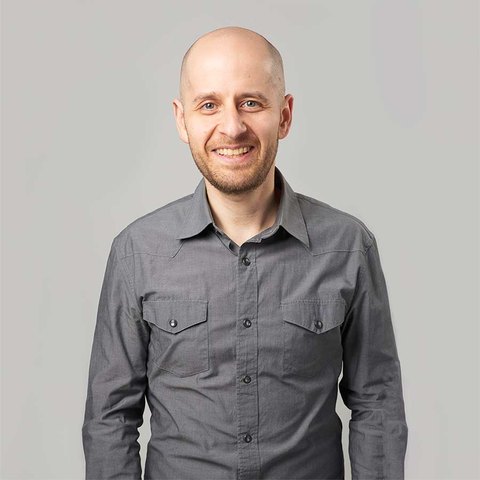
I'm Dmitry Dragilev. I build tools that exploit systematic gaps in how search decides who wins — and I've been fortunate that Google, SEOJet, and Semrush (twice) agreed the tools were worth buying. I did it working about 3 hours a day — I build businesses for lifestyle freedom, not a golden cage. I've written about search and PR for Forbes, TechCrunch, WIRED, Moz, and the Semrush blog since 2009, and helped 500+ companies rank #1.
In 2014, Polar Polls — the mobile polling startup where I ran growth — was acquired by Google, and the team went on to work on Google's own products. I took a different lesson out of that building: distribution beats polish, and distribution comes from understanding exactly how the ranking machine decides.
JustReachOut turned that lesson into software for PR — it helped thousands of founders pitch journalists without an agency, and SEOJet acquired it in 2020. Smallbiz.Tools curated the tool landscape well enough that Semrush bought it in 2023. And then came the one that changed everything for me.
SERP Gap Analyzer did one narrow thing obsessively: it found weak spots in Google's top 10 — outdated pages, thin content, low-authority stragglers — and told you which keywords were winnable because of them. It became the #1 top-performing app in the entire Semrush App Center. In October 2025, as Adobe was completing its acquisition of Semrush, Semrush acquired SERP Gap Analyzer too.
Mobile polling; ran growth from zero to 40M+ monthly answers.
DIY PR software used by 5,000+ founders.
Curated software discovery for small business.
#1 top-performing Semrush App Center app.
Same playbook. New battlefield.
For years, the game was: find the vulnerable page in Google's top 10, publish something stronger, take the position. But by late 2025, roughly 60% of queries opened with an AI Overview — and the pages my old tool analyzed were being read by fewer and fewer humans. The contest had moved inside the answer: which passages get retrieved, which claims get trusted, which article gets cited as the source.
And here's what I saw when I started dissecting those AI answers claim by claim: they have weak spots too. Stale figures. Unsourced absolutes. Claims grounded on a single 2023 blog post. The exact same class of vulnerability SERP Gap Analyzer hunted in the top 10 — except now it lives inside the AI's own sentences, and almost nobody is auditing it.
So the week the acquisition closed, I started building. LLM Gap Analyzer is SERP Gap Analyzer's sequel: instead of finding weak spots in Google's top 10, it finds weak spots in the AI answer itself — then hands you the exact sentence to publish to take the citation. It launched in the Semrush App Center, the same place its predecessor became #1.
Advice that ends at "improve your E-E-A-T" is decoration. Every guide here ends with a keyword, a graded claim, and the replacement passage — because that's what the tool itself outputs.
Everything we claim about how AI answers work comes from dissecting live answers — and where we're inferring, we say so. The same standard we grade AI Overviews against.
Our comparison page includes a "when NOT to buy us" section, and our study page won't publish until the data is real. Trust is the whole product in this category.
No sales team, no demo call gatekeeping. If you have a question about the tool, a partnership idea, or you just want to argue about AI Overviews: dmitry@criminallyprolific.com. More of my writing and story at criminallyprolific.com.
 LLM Gap Analyzer Semrush App Center