 LLM Gap Analyzer Semrush App Center
When an AI analysis flags “weak E-E-A-T,” it isn't judging your brand — it's reporting that a specific passage failed observable checks: no named author near the claim, no evidence beside it, no date, no first-hand markers, or conflict with better-sourced passages. Roughly 96% of AI Overview citations come from sources with strong E-E-A-T characteristics — but the evaluation happens where the claim lives, not on your About page. Which means the repair is also local: fix the passage, not the brand.
E-E-A-T — Experience, Expertise, Authoritativeness, Trust — spent a decade as SEO's most hand-wavy concept: everyone agreed it mattered, nobody could point to where. AI answer engines changed that. When a grounding system decides whether your paragraph is safe to build an answer on, it runs checks a machine can actually run. Those checks are legible. And "weak EEAT" — the phrase the tool's content gap analysis uses — refers to failing them.
The one number that reframes the whole topic
Read the 96% figure carefully: it doesn't say trust helps. It says almost nothing gets through without it. That's a pass/fail gate — and gates are good news, because passing a gate is a checklist, not a reputation campaign.
The observable signals, letter by letter
Experience — "was a human actually there?"
Machines detect experience through textual markers: first-person testing language ("we ran this for 90 days"), specifics no summary would contain (error messages, exact settings, photos of the thing), and honest limitations ("this broke when we tried X"). This is precisely why Reddit threads out-cite polished articles on validation queries — and why the fix is to keep the experience voice while adding evidence, not to strip it out.
Expertise — "is a qualified someone attached to this claim?"
Not a byline somewhere on the site — a named author with verifiable credentials on this page, ideally with Person schema linking to a consistent identity across the web. Anonymous content asks the model to trust a claim with no one behind it; models increasingly decline.
Authoritativeness — "does the wider record agree?"
The signal closest to classic SEO: citations of your work elsewhere, entity consistency across profiles, and — measurably — whether your claims cite authoritative sources themselves. Referencing strong sources lifts your own citation odds by ~40%; the model treats well-referenced passages as safer ground.
Trust — "can this specific claim be verified right now?"
The strictest and most local check: is there a source beside the claim? A date on the data? Does the number match the authoritative record? Is the page's update date recent? This is where most "weak EEAT" verdicts actually originate — confident, sourceless assertions, which our claim study found in most commercial AI answers.
Worked example: "how much does a kitchen remodel cost" — failing passage → cited passage
A remodeling contractor's cost guide ranks #4 for how much does a kitchen remodel cost but the content gap analysis flags its core cost passage for weak E-E-A-T. Here's the flagged passage, the specific check failures, and the repaired version that won a citation. (Sample analysis — run your own article for the live version.)
CHECK FAILURES → no author attached · no source or date for the range · figure matches a stale 2023 aggregator (conflict with fresher record) · no experience markers despite the firm remodeling ~90 kitchens/year
Across the 87 kitchen remodels we completed in 2025–2026, project costs ran $19,400–$74,000, with a median of $38,200 — pull-and-replace projects clustered at $19–28k, layout-change projects at $45k+. Figures from our closed-job invoices, updated July 2026. — J. Marsh, licensed GC, 22 yearspasses · experience + first-party evidence + author + date
The pattern generalizes: the aggregator range failed because fifteen sites repeat it and none can verify it. The contractor's passage won because it's the only one in the pool that is simultaneously first-party, dated, distributed (not a point guess), and attributed. That combination is what "strong E-E-A-T" means to a machine.
The passage-level repair checklist
- Find your flagged passages. Run the article through LLM Gap Analyzer — the content gap analysis detects weak E-E-A-T and wrong information in your existing content, per passage.
- Attach a human. Named author on the page, credentials relevant to the claim, Person schema, consistent identity across your profiles.
- Move evidence next to claims. Every important number gets a source and a date in the same breath. Evidence three paragraphs away doesn't protect the sentence being lifted.
- Add experience markers where real. Tested it? Say how, for how long, and what went wrong. Never fabricate — models cross-check, and a caught fake craters the exact trust you're building.
- Reconcile with the record. Where your figure disagrees with authoritative sources, either update it or explain the discrepancy explicitly. Silent conflicts read as errors.
- Timestamp visibly, update honestly. A current "last updated" date backed by real changes; 62% of citations reference content updated within the last 90 days.
How a machine actually reads your authorship (and the markup that helps it)
"Add an author bio" is where most E-E-A-T advice stops. Here's the mechanical version — what has to connect for the credibility check to resolve:
The system needs to complete a triangle: this claim → this named person → this verifiable identity. The byline links claim to name; structured data links name to a machine-readable Person; and the Person's sameAs links tie it to an identity that exists beyond your own site. Break any edge and attribution degrades to "anonymous page asserts…". Complete it, and every claim on the page inherits the author's record. This is entity reconciliation — the same mechanism that causes brand confusion in ChatGPT — working for you instead of against you.
The minimal markup that completes the triangle (adapt and place alongside your Article schema):
{
  "@type": "Article",
  "headline": "How much does a kitchen remodel cost in 2026?",
  "dateModified": "2026-07-20",
  "author": {
    "@type": "Person",
    "name": "J. Marsh",
    "jobTitle": "Licensed General Contractor",
    "knowsAbout": ["Kitchen remodeling", "Construction cost estimation"],
    "sameAs": [
      "https://www.linkedin.com/in/jmarsh-gc",
      "https://www.contractor-board.example/license/12345"
    ]
  }
}
Note what the fields do: jobTitle and knowsAbout state relevance to this claim domain; sameAs gives the reconciler off-site edges to verify against; dateModified feeds the freshness check. None of it manufactures credibility — it makes real credibility machine-legible, which is the entire honest scope of schema.
The site-level triad (beyond the passage)
Three page-level assets keep showing up on heavily-cited domains, and each is a one-day build: a real editorial policy page (how you verify figures, how often you re-review), a methodology block reused under every data passage ("verified against all 9 vendors' pricing pages, July 2026"), and per-author archive pages that aggregate one person's work (giving the entity a home URL to reconcile to). They're unglamorous, which is exactly why they differentiate.
Go deeper: where the trust gate sits in the machinery → the selection pipeline. What failing passages look like at scale → the claim study. Shipping repairs systematically → the workflow.
Find every weak-E-E-A-T passage in your article.
The content gap analysis flags weak E-E-A-T and wrong information passage by passage — with the fix drafted. 30 analyses/month on the base plan. 7-day free trial.
Audit my article's E-E-A-TFrequently asked questions
What does E-E-A-T stand for?
What does 'weak E-E-A-T' mean in an AI content analysis?
Is E-E-A-T an actual Google ranking factor?
Does E-E-A-T affect AI Overviews and LLM citations?
How do I improve my website's E-E-A-T?
How does Google measure 'Experience' in content?
Do author bios really matter for SEO and AI citations?
What is passage-level E-E-A-T?
Can a small or new website have strong E-E-A-T?
Does schema markup improve E-E-A-T?
What are examples of weak E-E-A-T signals?
How does first-party data improve E-E-A-T?
Does YMYL content need stronger E-E-A-T?
How long does it take for E-E-A-T improvements to show results?
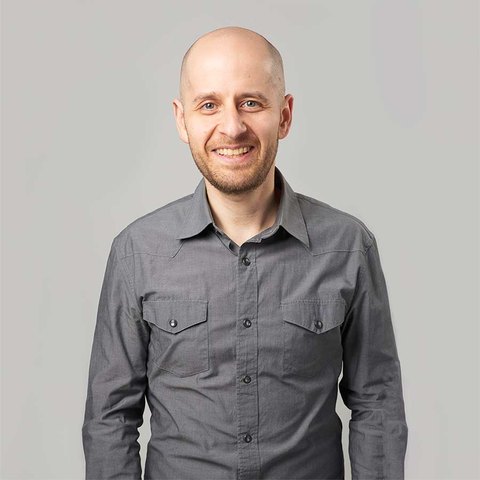
Dmitry Dragilev
4× acquired founder: Polar Polls → Google (2014), JustReachOut → SEOJet (2020), Smallbiz.Tools → Semrush (2023), SERP Gap Analyzer — the #1 top-performing app in the Semrush App Center → Semrush (2025). Contributor to Forbes, TechCrunch, WIRED, and Moz since 2009. More at criminallyprolific.com.