 LLM Gap Analyzer Semrush App Center
The AI visibility category splits into two jobs. Trackers — Profound, Otterly, SE Visible, Ahrefs Brand Radar, the Semrush AI Toolkit, and others — monitor whether your brand appears in AI answers over time: the scoreboard. Fixers — LLM Gap Analyzer's category — dissect why a specific answer chose its sources and hand you the content changes to become one: the repair manual. They're complementary, not substitutes. If you don't know whether you have a problem yet, start with tracking. If you already know which keywords you're losing, start with fixing.
Disclosure: I built LLM Gap Analyzer, so read this as a founder's map, not a neutral review. I've tried to keep it honest enough that a Profound customer would nod along — including the section on when you shouldn't buy my tool.
- Correction from our last update: we'd reported Ahrefs Brand Radar had added Claude. On closer check against Ahrefs' own Brand Radar page, that's wrong — Brand Radar covers six indexes (Google AI Overviews & AI Mode as one, ChatGPT, Perplexity, Copilot, Gemini, and Grok) but still has no Claude coverage as of early August 2026, a real gap if your buyers skew technical. Full engine-by-engine detail is in the tool dossiers below.
- Jun 17 — Adobe launched "Adobe Brand Visibility," an enterprise product pairing Semrush's AI-search data with Adobe's own LLM Optimizer — the clearest sign yet that the Semrush AI Toolkit's roadmap now serves Adobe's enterprise ambitions first. Adobe's own Summit 2026 data claims AI-referral traffic to U.S. retail sites grew 269% year-over-year through March 2026.
- 2026 — Semrush shipped an MCP Server and an official ChatGPT app, giving Claude, ChatGPT, and Cursor live API access to Semrush's data (50,000 API units/month included on Pro, Guru, and Semrush One) — ahead of every other tool on this page for AI-agent orchestration, whatever you think of the rest of the packaging.
- Profound published a citation-speed benchmark across roughly 900 fresh marketing pages: median time to first citation on ChatGPT or Claude was 6.81 days, and 90% of pages that got cited did so within about 37 days. If your page has been live a month with zero citations, that's usually a technical block, not a content problem — worth running a gap analysis before you assume the content is the issue.
- Aug 21 — Google shipped its third 2026 spam update and started routing some AI Mode answers through Gemini 3.7 Flash (Search Engine Roundtable). A faster, cheaper model behind AI Mode tends to precede broader rollout; expect more queries to trigger AI Mode responses in the coming weeks.
- Aug 13 — Mod Op launched a free "GEO 50" benchmark (GlobeNewswire) ranking how 50 major brands appear across AI answer engines, alongside a free self-serve AI Search Visibility Audit at geo.modop.ai — one more free on-ramp before teams buy a paid tracker.
- The money keeps arriving: the AI-visibility software category pulled in more than $300M in disclosed funding between summer 2025 and spring 2026 across Profound, Peec.ai, Scrunch (pre-acquisition), and others — plus Sitecore's ~$225M acquisition of Scrunch (June 3, 2026) and Adobe's $1.9B all-cash purchase of Semrush (closed April 28, 2026). This is now a category incumbents pay billions to own.
The two jobs, and why one tool rarely does both
Tracking is a breadth problem: run thousands of prompts across engines on a schedule, aggregate mentions, chart share of voice against competitors. It rewards scale, scheduling, and dashboards.
Fixing is a depth problem: take one live answer and reconstruct it — which source powered which segment, which claims are well-grounded and which are standing on a stale 2024 blog post, what your article specifically lacks, and what sentence, placed where, changes the outcome. It rewards forensic resolution, which is expensive per query and pointless to run on a nightly schedule.
Different economics, different outputs, different buyers' moments. Which is why the market keeps producing both — and why "GEO tool" comparisons that rank them on one axis confuse people.
The map
Google's own AI Overview names three tools first when someone searches for AI visibility monitoring: Profound, the Semrush AI Toolkit, and Ahrefs Brand Radar (see the SERP audit below). We've added both suite trackers to the table so the map matches what buyers are actually being shown before they ever reach this page.
| Profound | Otterly | SE Visible | Ahrefs Brand Radar | Semrush AI Toolkit | Peec.ai | LLM Gap Analyzer | |
|---|---|---|---|---|---|---|---|
| Job | Enterprise AI share-of-voice & brand monitoring | AI search monitoring for SMB/mid-market | AI visibility tracking in the SE Ranking suite | AI mentions layered on the Ahrefs index | AI visibility module inside Semrush | Berlin-built pure-play AI search analytics | Per-answer forensics + per-article fixes |
| G2 rating (approx., verify live) | 4.5–4.6★ (1,000+ reviews) | 4.8★ (250+ reviews) | No standalone G2 profile yet† | No standalone G2 profile† | No standalone G2 profile† | 4.9★ (per vendor's own claim) | New listing — pre-review |
| Funding raised | $155M ($1B valuation, Feb 2026) | $0 — deliberately bootstrapped | N/A — part of SE Ranking | N/A — part of Ahrefs | Acquired by Adobe for ~$1.9B (Apr 2026) | ~$29M ($100M+ valuation) | Bootstrapped, Semrush App Center |
| Scheduled tracking across many prompts | Yes — core strength | Yes | Yes | Yes | Yes | Yes | No — on-demand, per keyword/prompt |
| Share-of-voice dashboards | Yes | Yes | Yes | Yes | Yes | Yes | No |
| Explains why a source was chosen (reasoning per answer) | Limited | Limited | Limited | Limited | Limited | Limited | Yes — 6-layer Answer Breakdown |
| Grades claims in the answer (weak / unsourced) | No | No | No | No | No | No | Yes — Claim Analysis |
| Sentence-level fixes for your article | No | No | No | No | No | No | Yes — location + ready-to-paste content + competitor you'll replace |
| Engines | 10+ AI platforms (tiered) | 4 included (ChatGPT, AI Overviews, Perplexity, Copilot) + 3 paid add-ons (Claude, Gemini, AI Mode) | 5 engines: ChatGPT, Perplexity, Gemini, AI Overviews, AI Mode — no Claude/Grok/Copilot yet | 6 indexes: AI Overviews+AI Mode, ChatGPT, Perplexity, Copilot, Gemini, Grok — no Claude | 4 engines: ChatGPT, Google AI, Gemini, Perplexity | 3 of 7 per plan (self-serve); Claude is Enterprise-only | Google AI Overviews + ChatGPT (Gemini, Claude soon) |
| Entry price | $99/mo Starter (ChatGPT only, 50 prompts); real use starts ~$399/mo | $29/mo (Lite) · $189 Standard · $489 Premium | From $99/mo (standalone) or bundled in SE Ranking Core $129/mo | $199/mo per index or $699/mo for six — plus a required Ahrefs base plan ($129/mo+); realistic full cost $828–$1,148/mo | $99/mo per domain, billed annually, or $199/mo in the Semrush One bundle | $95/mo Starter · $245 Pro · $495 Advanced + $30–140/mo per extra engine | $49/mo flat · 7-day trial · unlimited $59/mo |
†SE Visible, Brand Radar and the Semrush AI Toolkit are modules inside larger suites (SE Ranking ~4.8★/1,400+ reviews; Semrush ~4.5★/thousands of reviews) that don't yet carry their own separate G2 category listing. For context, one industry survey put the average dedicated AI-visibility tool at ~$337/month (Rankability, Jan 2026) — several rows above are well above that average once add-ons are included. Pricing and engine counts reflect public vendor pages as of late August 2026 and move often — verify before buying.
What Google's own AI Overview shows for "visibility checking tools" — and the gap it exposes
Since this page lives to explain why AI answers cite what they cite, it seemed dishonest not to run that lens on itself. Here's what Google returned for the broad head term this category rolls up under, pulled the same week this update went live.
- The AI Overview splits the category in two — "Traditional SEO Visibility Tools" (SISTRIX, Semrush) and "AI & LLM Visibility Checkers" (Loamly, Search Visibility, Peec.ai, OpenLens) — which is close to this page's tracker/fixer split, but sorted by surface tracked rather than job done. No tool in either list is described as producing a content fix.
- The organic results underneath skew toward free checkers, not monitoring platforms: SISTRIX's free Visibility Index, Birdeye's free AI visibility checker, Leapd's free tool, and a Reddit thread comparing free options all outrank the paid trackers this page covers. That's a real signal — before people buy a subscription, they want a free first read.
- A related "People Also Ask" AI Overview names a different top three for "best AI visibility monitoring tools": Profound, the Semrush AI Toolkit, and Ahrefs Brand Radar — which is exactly why we added the latter two to the comparison table above. If your own AI-visibility research only turned up Profound, Otterly and SE Visible, you were missing two tools Google itself is actively surfacing.
- The gap none of the cited sources close: every source in Google's own AI Overview for this query — including the vendors' own sites — describes what the tools measure. None of the eight cited sources describes what to change on a page once you know you're losing. That gap is this page's entire argument for why fixers exist as a separate category, and it's visible in Google's own citations, not just in our pitch.
Source: Google AI Overview and organic results for "visibility checking tools," captured the week of August 24, 2026 via SERP monitoring. AI Overview content is regenerated per query and changes over time — treat this as a dated snapshot, not a permanent ranking.
One keyword through both tool types: "best crm for startups"
The clearest way to see the split is to run the same losing keyword through each tool class and compare what comes back. (Sample outputs, representative of each class.)
FIXER → "Competitor A grounds 3 of 6 claims; its March 2026 pricing table won the framing slot. Weakest claim in the answer: 'all startup CRMs include free migration' (unsourced — actually 4 of 9 vendors). Your page lacks a migration-cost passage entirely. Location: after H2 #3. Suggested content drafted. Article you'll replace: competitor A's pricing post."the why + the where + the fix
When you should NOT buy LLM Gap Analyzer
Sales pages never include this section, which is exactly why this one does:
- You need continuous monitoring across hundreds of prompts. That's a tracker's job. Buy Profound (enterprise), Otterly (SMB), or SE Visible (if you're already in SE Ranking) — and come back when the dashboard shows you what's broken.
- You have no content team. Our output is editing instructions. If nobody will ship the edits, the analysis is a very detailed description of a problem you won't fix.
- Your keywords don't trigger AI answers. Some niches still see few AI Overviews. Check first; don't buy a repair manual for a machine you don't own.
How teams run both (the sane stack)
- Tracker finds the bleeding. Weekly dashboard: which prompts/keywords mention competitors but not you, where share of voice is slipping.
- Fixer performs the surgery. The 5–10 worst losses go through LLM Gap Analyzer: source reasoning, weakest claims, gap list, ready-to-paste fixes — the full gap-analysis workflow.
- Tracker verifies the recovery. Citations flip in days-to-weeks after recrawl; the dashboard turns your edits into a before/after chart leadership understands.
Total stack cost for an SMB running Otterly + LLM Gap Analyzer: under $90/month — less than one hour of the consultant who'd tell you the same thing quarterly.
Tool dossiers: who's behind each tracker, what they've raised, and what G2 & Reddit actually say
Vendor pricing pages and comparison blogs (including this one) all have a reason to spin. Funding rounds, customer lists, G2 review counts, and Reddit threads are messier but harder to fake. Here's the full profile on each of the six trackers on this page — company background, standout feature, and honest pros/cons — condensed from funding databases (Crunchbase, Tracxn, Fortune, TechCrunch), public G2 review pages, and Reddit discussion threads in r/SEO, r/AskMarketing and r/ArtificialIntelligence. Sentiment is paraphrased in our own words rather than quoted, and everything is dated because every one of these numbers will move.
Standout feature: the Profound Index, billed as the first systematic AI-visibility measurement framework, plus Agent Analytics — a Google-Analytics-connected view of which pages AI bots actually crawl and how that traffic converts. Profound also publishes original research: a benchmark of ~900 fresh marketing pages found a median 6.81-day time-to-first-citation on ChatGPT/Claude, with 90% cited within ~37 days.
Top pro (G2): reviewers consistently point to the depth of the dashboards and how much clearer AI-answer patterns become once the platform is set up — several credit their account rep with a genuinely smooth onboarding.
Top con (G2 + Reddit): the same depth becomes a learning curve for teams without a dedicated analyst; a cluster of 2026 reviews also cites recurring bugs, billing errors and slow data exports, and Reddit threads comparing Profound against Peec.ai and Otterly describe it as the most powerful option but the one that most needs a person whose job is to live in it.
Standout feature: the GEO Audit (crawlability + predictive citation-readiness scoring before you publish), and its own published research — a study claiming AI search engines source 95% of citations from third-party sites, not brand-owned domains, which is a genuinely useful data point for anyone pitching digital PR budget.
Top pro (G2): the most repeated words across reviews are "easy" and "fast" — setup, onboarding and the shift from keyword lists to prompt lists get called out as smoother than expected, and support responsiveness comes up unprompted in multiple reviews.
Top con (G2 + Reddit): only 4 of 7 advertised engines (ChatGPT, AI Overviews, Perplexity, Copilot) are included by default — Claude, Gemini and Google AI Mode cost extra, which some reviewers feel is under-disclosed on the marketing site; there's also no native CRM or traffic-attribution integration, a real gap versus competitors offering GA4-linked revenue data.
Standout feature: multi-language, multi-country tracking (5 languages, 7 countries with localized prompt suggestions) at a lower price than most specialists — and it now covers 5 engines (ChatGPT, Perplexity, Gemini, AI Overviews, AI Mode), up from ChatGPT + AI Mode only at launch.
Top pro: reviewers of the core SE Ranking suite consistently rate ease of use and support above category average, and buyers already on SE Ranking describe the AI module as a low-friction way to try AI tracking without a new login or contract.
Top con: still no Claude, Grok, Copilot, or Meta AI coverage; refresh cadence is weekly, which reviewers call slow for a ~$99–189/mo tool when AI answers can shift daily; and the split between the in-suite "AI Results Tracker" add-on and the standalone "SE Visible" product still confuses buyers about what they're actually purchasing.
Standout feature: the citation-source view — when an AI answer names your brand, Brand Radar shows exactly which URL it pulled the mention from (your own site, a Reddit thread, a review roundup, a competitor's blog), leveraging Ahrefs' web-scale index. It's also the only tool on this page that tracks Reddit, YouTube, and TikTok visibility alongside the AI engines (a paid module, +$199/mo after its beta period).
Top pro: reviewers who already pay for Ahrefs like that Brand Radar sits next to the backlink and keyword data they already trust, so AI citations can be cross-referenced against real SEO history in one screen — and self-serve signup means no sales call to start.
Top con: pricing is the single most repeated complaint by a wide margin — $199/mo per index or $699/mo for six, stacked on top of a required Ahrefs base plan, pushes realistic full coverage to $828–$1,148/mo (roughly 2.5x the category-average $337/mo per one industry survey); the default 2,500-prompt-check cap is also easy to blow through, since one check equals one prompt × one engine × one location.
Standout feature: scale — a 126M-prompt dataset in the 2026 index, one of the largest in the category — plus a new Semrush MCP Server and official ChatGPT app giving Claude, ChatGPT, and Cursor live API access to Semrush data (50,000 API units/month included on Pro, Guru, and Semrush One), ahead of every other tool on this page for AI-agent orchestration.
Top pro: for teams already inside Semrush, reviewers describe the AI Toolkit as a one-login way to sit AI visibility next to keyword and competitor data they already use daily — no new vendor, no new contract.
Top con: per-domain pricing (roughly $99/mo each) multiplies fast for agencies running multiple client sites; the four-engine coverage (no Copilot, Grok, or Claude) is thin for the price versus dedicated trackers; and a Reddit thread in r/seogrowth specifically questions the toolkit's data accuracy — worth asking about directly in a trial, especially with the Adobe roadmap still settling.
Standout feature: sentiment and mention-quality scoring — the capability reviewers most often single out as best-in-class — plus a browser-simulation methodology (it scrapes the assistants' actual web interfaces rather than calling their APIs), which the company argues produces results closer to what a real user sees. Onboarding auto-generates a brand profile and starter prompts from just a domain in about three minutes.
Top pro (G2): reviewers highlight fair, transparent pricing and a clean interface that's easy to navigate from a top-line overview down into individual prompts, plus support described as going out of its way to help.
Top con (G2): every self-serve plan (Starter $95, Pro $245, Advanced $495) caps you at 3 of 7 engines, with extra engines costing $30–140/mo each and Claude locked to the Enterprise tier; reviewers also ask for more integrations — Google Analytics is the one named most often.
The pattern that survives all six: ease-of-setup and support are the most common praise, pricing structure is the most common complaint, and not one of the six draws a single Reddit or G2 comment claiming the tool told them exactly what sentence to change. That's not a knock on any individual vendor — it's a description of the monitoring category itself.
The wider field: names you'll see on shortlists but won't find a full dossier for here
Six tools is a lot, but it isn't the whole category. Worth knowing about if the six above don't fit: AthenaHQ pitches itself as going beyond monitoring into execution, closer to this page's "fixer" category than a pure tracker. Nightwatch, Rankshift, and Dageno AI show up regularly in third-party roundups as lower-cost alternatives. OpenLens stands out for having a genuinely usable forever-free tier (2 seats, 3 projects, 1,000 pooled credits/month, 50 MCP calls). And Cloro skips the dashboard entirely — it's a pay-per-call API (from $0.80 per 1,000 credits) that returns AI answers and cited sources as structured JSON, built for agencies and product teams who want to build their own reporting layer rather than log into one more tool.
Seven questions that expose any AI-visibility vendor in one demo call
Category marketing has converged ("GEO platform," "AI SEO"), so the tools sound identical until you ask questions the dashboards can't deflect. Take these to every demo — including ours:
- "Show me WHY this specific answer cited this specific source." Trackers show that it happened; only per-answer reasoning shows why. If the answer is a correlation chart, you're looking at a tracker.
- "Which claim in this answer is weakest, and how do you know?" Claim-level grading either exists in the product or it doesn't. This single question separates the categories in ten seconds.
- "What exactly do I change on my page — show me the sentence and the location." "Improve topical authority" is not an answer a writer can ship Tuesday.
- "Is this data live or cached, and from which surface?" Overviews regenerate; cached SERPs age in days. Also confirm which surfaces are covered — AI Overviews and AI Mode citations overlap far less than vendors imply.
- "What's the per-query cost at my real usage?" Per-prompt-per-engine-per-day pricing multiplies quietly. Get the number for your keyword count.
- "Show me a before/after where a customer's content change flipped a citation." The honest answers are revealing in both categories: trackers measure it, fixers cause it, and vendors with neither change the subject.
- "What should I NOT use you for?" Every honest vendor has a crisp answer. (Ours is at the top of this page.)
Scoring guide: questions 1–3 test whether it can fix; 4–6 test whether the tracking is trustworthy; 7 tests whether the vendor is. A tool that passes 1–3 but not 4–6 is a fixer (that's us — we told you the tracking limits above). A tool that passes 4–6 but not 1–3 is a tracker. A tool claiming all seven deserves your hardest follow-ups.
Go deeper: what "why this source" mechanically means → the selection pipeline. What claim-grading finds in the wild → the study. The workflow a fixer should enable end-to-end → gap analysis, step by step.
Already know which keywords you're losing?
Then you're past the tracking stage. Run those keywords through the Google AI Gap Analyzer and get the why and the fix. 7-day free trial in the Semrush App Center.
Analyze my lost keywordsFrequently asked questions
What is the best AI visibility tool?
What is GEO (Generative Engine Optimization)?
What does Profound do?
What is a good Otterly alternative?
How much do AI visibility tools cost?
What's the difference between AI visibility tracking and rank tracking?
Do I actually need an AI SEO tool?
Can LLM Gap Analyzer replace Profound or Otterly?
Is Semrush building its own AI visibility features?
What should I look for when choosing an AI visibility tool?
Can I use LLM Gap Analyzer as a lightweight tracker?
Which AI engines do these tools cover?
How do I measure ROI from AI visibility tools?
What are Ahrefs Brand Radar and the Semrush AI Toolkit, and how do they compare to Profound and Otterly?
What do G2 and Reddit users actually say about AI visibility trackers?
How we researched this page
Every pricing figure, engine count, funding round, and G2 rating above was checked against vendor pricing pages, public G2 product and pros-and-cons pages, funding databases (Crunchbase, Tracxn, PitchBook), business press (Fortune, TechCrunch, TechFundingNews), and Reddit threads in r/SEO, r/AskMarketing and r/ArtificialIntelligence — most recently during the week of August 24–28, 2026. We did not use unverified Capterra scores, and we did not put words in quotation marks that weren't confirmed on the source page — sentiment above is paraphrased, not quoted. G2 review counts, star ratings, and engine coverage shift weekly in this category (Peec.ai's G2 volume alone went from single digits to hundreds of reviews within a year), so treat every number here as a snapshot, not a live feed; the vendor's own pricing and G2 profile are always the source of truth at the moment you're evaluating.
Where a claim came from our own product (LLM Gap Analyzer) rather than a third party, we've labeled it that way in the comparison table and marked it "new listing — pre-review" rather than inventing a rating. Where we could not verify a figure independently (for example, SE Visible's exact review count once it splits fully from SE Ranking's G2 profile), we said so instead of estimating. We also correct ourselves in place: a previous version of this page stated Ahrefs Brand Radar had added Claude coverage; that was wrong, and the "what's new" box above now carries the correction rather than a silent edit.
Corrections: if you work at any vendor named on this page and a figure is stale or wrong, email dmitry@criminallyprolific.com with a link to the current source and we'll fix it.
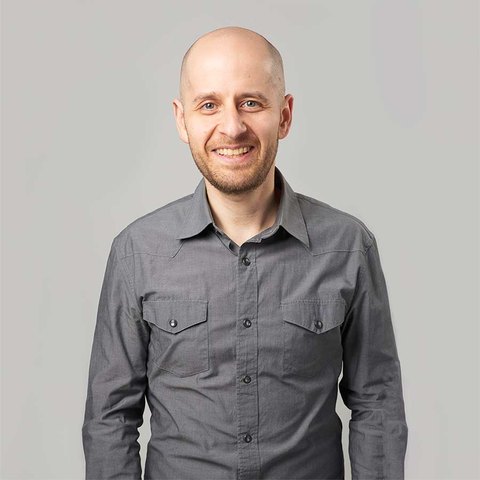
Dmitry Dragilev
4× acquired founder: Polar Polls → Google (2014), JustReachOut → SEOJet (2020), Smallbiz.Tools → Semrush (2023), SERP Gap Analyzer — the #1 top-performing app in the Semrush App Center → Semrush (2025). Contributor to Forbes, TechCrunch, WIRED, and Moz since 2009. More at criminallyprolific.com.