 LLM Gap Analyzer Semrush App Center
Your page isn't cited because ranking signals and citation signals are two different systems. Google's AI Overview selects sources at the passage level — judging extractability, claim verifiability, freshness, and E-E-A-T — not at the ranking level. Only ~38% of AI Overview-cited pages rank in the organic top 10. A page can hold position #1 and fail every passage-level test. The fix: identify which specific test you're failing (a gap analysis shows this in ~3 minutes) and repair that passage — not build more links.
This is the most common — and most maddening — situation in AI search right now. You did everything right. You rank. And a summary box above your listing is quoting three sites you outrank, while your click-through rate quietly bleeds out.
Why do ranking and citation diverge?
Classic ranking evaluates your page against a query using links, relevance, and hundreds of aggregated signals. The AI Overview pipeline does something different: it fans your query out into sub-questions, retrieves a pool of candidate passages, filters them through a trust gate, and asks a language model to assemble an answer from the survivors. Your domain authority gets you into the candidate pool. It does not get a single sentence of yours quoted.
That's why the overlap between "ranks top 10" and "gets cited" collapsed to roughly a third. The AI isn't ranking you. It's shopping for sentences.
The 5 reasons AI skips a page that ranks
- No extractable answer unit. Your page answers the question — across four paragraphs, an anecdote, and a table. The AI wants a self-contained 100–170 word passage it can lift safely. If the answer only exists "in aggregate," you fail retrieval even though a human reader is satisfied.
- Unverifiable claims. AI Overviews are built around grounding safety. A confident claim with no source, no date, and no number is a liability to the model — it will prefer a weaker site whose claim it can verify. This is exactly what our claim analysis study measures.
- Stale freshness signals. 62% of AI citations reference content updated within the last 90 days. If your "ultimate guide" was last touched in 2024 and a thinner competitor page shows a June 2026 update date with 2026 data, the model treats theirs as safer.
- Weak passage-level E-E-A-T. Not sitewide authority — this passage. No named author, no first-hand experience markers, no cited evidence near the claim. We break down what the machine is actually checking in the E-E-A-T signals LLMs check.
- Intent mismatch with the fan-out. The AI expanded your keyword into sub-questions your page never addresses. You optimized for the query; the AI answered the query cluster.
Worked teardown: "best crm for small business"
Here's a full example analysis of the kind the Google AI Gap Analyzer produces, for a page that ranks #3 for best crm for small business but isn't among the AI Overview's cited sources. (Sample analysis — run your own keyword to get your live version.)
What the AI Overview said (abridged), with each claim graded by Claim Analysis:
Weaknesses spotted, and why they matter:
- The pricing claim is stale. The AI is repeating a 2023 figure because no candidate passage offered a current one. That slot is open to whoever publishes a dated 2026 pricing table.
- The contact-cap claim is unsourced. The model synthesized a plausible-sounding rule with no grounding — the softest possible target: there is nothing to displace.
- The implementation claim is an absolute ("usually less than a day") resting on one vendor's marketing blog — a conflict-of-interest source the trust gate tolerates only when nothing better exists.
Content Gaps Found in the ranking-but-uncited article:
- No pricing section with per-vendor, dated figures (the sub-question the fan-out weighted most heavily: "how much does a small business CRM cost").
- No "how to choose" decision passage — the AIO's opening framing came from a competitor's chooser framework, not from the #3-ranked page.
- Update date visible as "January 2024" — failing the freshness check against three cited pages updated in Q2 2026.
Article Improvements (the fix):
Note what this teardown did not recommend: more backlinks, a rewrite, or "better content" in the abstract. It found three weak claims and two missing passages, and answered them with two surgical edits.
How to run this diagnosis on your own page
- Run the live answer. In LLM Gap Analyzer (Google AI tab), enter your article URL and the keyword. The tool captures the AI Overview in real time — 2–3 minutes.
- Read the Answer Breakdown. Query Understanding shows how the AI interpreted your keyword — intent mismatches (reason #5) become visible instantly.
- Open Content Gaps Found. The direct answer to "why not me": every sub-topic, fact, and structural element the cited sources have that your article lacks.
- Apply Article Improvements. Each recommendation gives the exact Location, ready-to-paste Suggested Replacement Content, and the competitor article your edit will displace.
- Re-run after indexing. Same URL, same keyword, a week or two after your update. Citations respond to passage changes far faster than rankings respond to links.
What Google's own paperwork says about why you're skipped
You don't have to take reverse-engineering on faith — Google has filed public documents that describe the machinery. Three matter most here:
The patent behind AI Overviews describes selecting a subset of search result documents (SRDs) as conditioning input for the summary, computing confidence measures for generated content, and "linkifying" only the portions of the summary that are attributable to a source document. Read that last clause again: citation isn't decoration — it's attribution the system must be able to defend. If no passage of yours can carry a claim's attribution, there is nothing for the system to linkify to you, no matter where you rank.
Google publicly moved to indexing and ranking individual passages, not just pages — "a needle in a haystack" retrieval, in their words. AI Overviews inherit this substrate: the unit of competition was already the passage before generative answers arrived. A page that answers brilliantly "in aggregate" but never in one liftable passage was already disadvantaged in 2020; the AI Overview just made the penalty visible.
Google itself describes its AI search issuing multiple related sub-queries ("query fan-out") and assembling results across them. This is why the selection pipeline starts with the expansion, and why Content Gaps Found so often lists sub-questions you never targeted: the system literally searched for them separately.
The synthesis nobody spells out: put these three documents together and "why not me?" has a formal answer. You weren't retrieved for enough of the fan-out's sub-queries, or your retrieved passages couldn't survive the confidence check, so nothing of yours was safe to linkify. Every fix in this guide maps to one of those three failure points.
A second quick teardown, to show the pattern holds
Different vertical, same physics — best running shoes for flat feet, where a podiatry clinic's excellent guide ranks #2 but sits outside the Overview:
Go deeper: the full selection pipeline is in how AI Overviews choose sources; what the confidence check rewards is in the E-E-A-T signals LLMs check; and the base-rate data on vulnerable claims is in our claim study.
Stop guessing which of the 5 reasons it is.
Run your URL + keyword through the Google AI Gap Analyzer and get the specific gap list for your page — with the sentence-level fix. 7-day free trial inside the Semrush App Center.
Analyze my page freeFrequently asked questions
Why is my website not showing up in Google's AI Overview?
Does ranking #1 on Google guarantee inclusion in the AI Overview?
How do I get my website cited in Google AI Overviews?
How does Google decide what appears in an AI Overview?
Do AI Overviews reduce organic clicks?
How long does it take to get into an AI Overview after updating content?
Does schema markup help you appear in AI Overviews?
Can you opt out of Google AI Overviews?
What percentage of Google searches show AI Overviews?
Is being cited in an AI Overview a ranking factor?
Why does the AI Overview cite low-authority sites instead of mine?
How do I check which sources my keyword's AI Overview cites?
Does updating old content help with AI Overview citations?
What content format do AI Overviews prefer to cite?
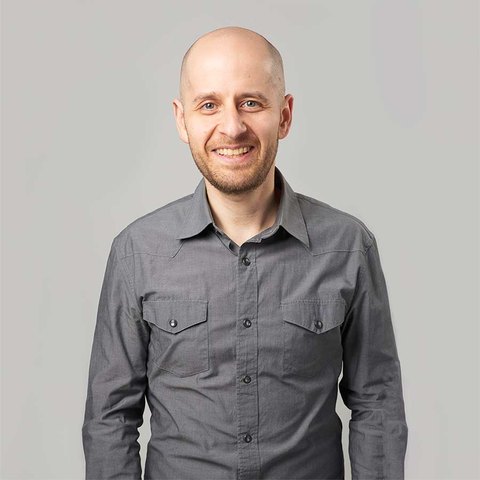
Dmitry Dragilev
4× acquired founder: Polar Polls → Google (2014), JustReachOut → SEOJet (2020), Smallbiz.Tools → Semrush (2023), SERP Gap Analyzer — the #1 top-performing app in the Semrush App Center → Semrush (2025). Contributor to Forbes, TechCrunch, WIRED, and Moz since 2009. More at criminallyprolific.com.